
Gender Emotional Stereotypes: Are Women more emotional than Men??
“Gender is a shell game. What is a man? Whatever a woman isn't. What is a woman? Whatever a man is not. Tap on it and it's hollow. Look under the shells: it's not there.”- Naomi Alderman, The Power.

Mental awareness is a curious journey. When we embark on this journey we mount mental checkpoints through which we sieve away perceptions, stereotypes, and biases that hold us back from living our lives in true wellness. This week we tap the hollow shell of gender.
Gender emotional stereotypes are beliefs and assumptions that people hold about how men and women are supposed to express and experience emotions.
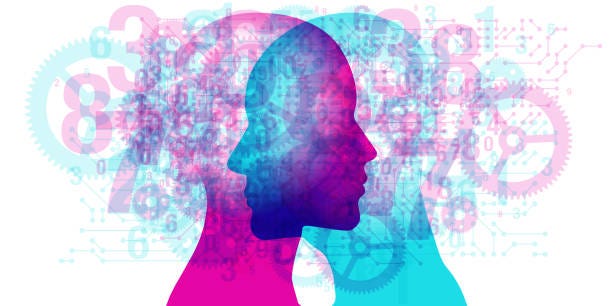
These stereotypes stem from the many expectations associated with "manhood" and "womanhood". From an evolutionary standpoint, society tends to value kindness, and compassion in women more than in men. Men are often associated with being protective and less vulnerable. Society often puts pressure on men to "be men" and women to "be women". These stereotypes can be harmful and limiting, as they can create unrealistic expectations for how people should behave based on their gender. They are the underlying cause of various issues such as body dissatisfaction, eating disorders, a high rate of male suicide, and violence against females.
These stereotypes suggest that women are more emotional than men and that they are more likely to express their emotions in ways that are seen as stereotypically feminine, such as crying, being nurturing, or being overly sensitive. On the other hand, men are often expected to be less emotional and to express their emotions in ways that are more stereotypically masculine, such as being stoic, aggressive, or dominant.
Are women more emotional than men??
The truth is that gender often influences how emotions such as enthusiasm, nervousness, and strength are perceived. However, several studies challenge this bias.
Research has shown that while men and women may express their emotions differently, there is no significant difference in the intensity or frequency of emotions experienced by men and women.
According to a study led by Adriene Beltz, a psychology professor at the University of Michigan, when a man displays emotional fluctuations during a sports event, he's viewed as "passionate." However, if a woman's emotions change for any reason, she is labeled "irrational."

To combat this bias, Beltz and her colleagues, Alexander Weigard, a psychiatry professor, and Amy Loviska, a Purdue University graduate student, followed 142 men and women over 75 days to understand their daily emotions, both positive and negative. The women were divided into four groups, including one group that was naturally cycling and three other groups using different forms of oral contraceptives.
The researchers detected emotional fluctuations using three different methods and then compared the men and women. They found no significant differences between men and the various groups of women, indicating that men's emotions fluctuate to the same degree as women's, although possibly for different reasons.
Beltz added that the study also found no significant differences between the groups of women, revealing that emotional highs and lows are influenced by many factors, not just hormones.
Neurologists at Mindlab found that men are more emotionally sensitive than women. The study tested 15 men and 15 women by showing them emotional videos and measuring their skin conductance. Men had stronger emotional responses in all four categories of emotional stimuli and were twice as responsive to heartwarming content compared to women. Women reported feeling more emotional than their skin conductance showed, while men said they felt less emotional than they were. In a separate survey by the company, 67% of men admitted to feeling more emotional than they let on.
Another research has found that men tend to experience more emotional pain during a breakup or relationship problems.
Although a couple of research also shows women as highly emotional. The purpose of this article is not to show that men are as emotional or more emotional than women but for the reader to detach him or herself from the “male” and “female” box, thereby acting appropriately at any given condition such that he/she lives in mental wellness.
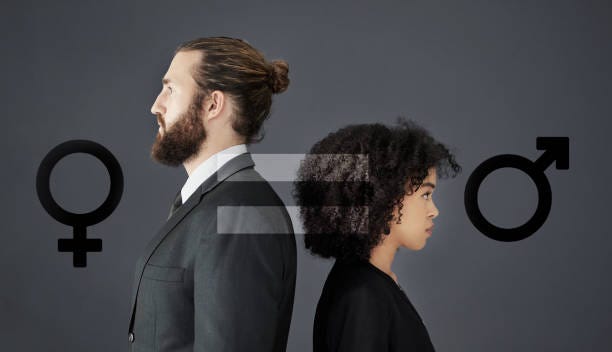
As men, we should not feel pressured to suppress our emotions or to express them in ways that are seen as more socially acceptable, which can lead to negative consequences for our mental health and well-being. Similarly, as women, we should not feel dismissed or trivialized when we express our emotions in ways that do not align with gender stereotypes.
Rather than labeling emotional traits as feminine or masculine, it is important to recognize that men and women have many facets that extend far beyond the traditional roles of their gender.
I conclude with the words of distinguished Professor Bell Hooks in her book-"All about love: New Vision".
"The wounded child inside many males is a boy who, when he first spoke his truths, was silenced by paternal sadism, by a patriarchal world that did not want him to claim his true feelings. The wounded child inside many females is a girl who was taught from early childhood that she must become something other than herself, and deny her true feelings, to attract and please others. When men and women punish each other for truth-telling, we reinforce the notion that lies are better. To be loving we willingly hear the other’s truth, and most importantly, we affirm the value of truth-telling. Lies may make people feel better, but they do not help them to know love."
Community Updates
Finally, our Beta product is live!🎉

Click the link below to be an early user.
In case you have questions, reach out to us at hello@theinsync.com
Yours in mental wellness,
Rema.
PS: You can tell me your stories. I want to hear your thoughts on your mental journey, what you want me to write about, and generally about anything. I am here to listen to you.